
Expert Plumbers Co
Drain Cleaning in Chicago, IL near me
Chicago, IL · 60601 24/7 phone line

Chicago Drain Cleaning for Backed-Up Basement Drains

The basement floor drain is bubbling, the tub is slow, and it all got worse when it rained. Tell us what the drains are doing and we connect you with an independent Chicago plumber who can cable, jet or camera the line, so call (380) 262-9173.

Nationwide Coverage
Symptom-First Matching
24/7 Emergencies
No Obligation
24/7
Live phone line

Drain Cleaning enquiry

Ask about Drain Cleaning in Chicago, IL

Tell us what the drain is doing and we connect you with an independent local Plumber.

Prefer to talk?
(380) 262-9173

Drain Cleaning services

Drain Cleaning and Plumbing Services in Chicago, IL

Symptom-led Drain Cleaning and related services across Chicago, IL. Tell us what the drain is doing and we match it to the right plumber.

01 / 06

Drain Cleaning

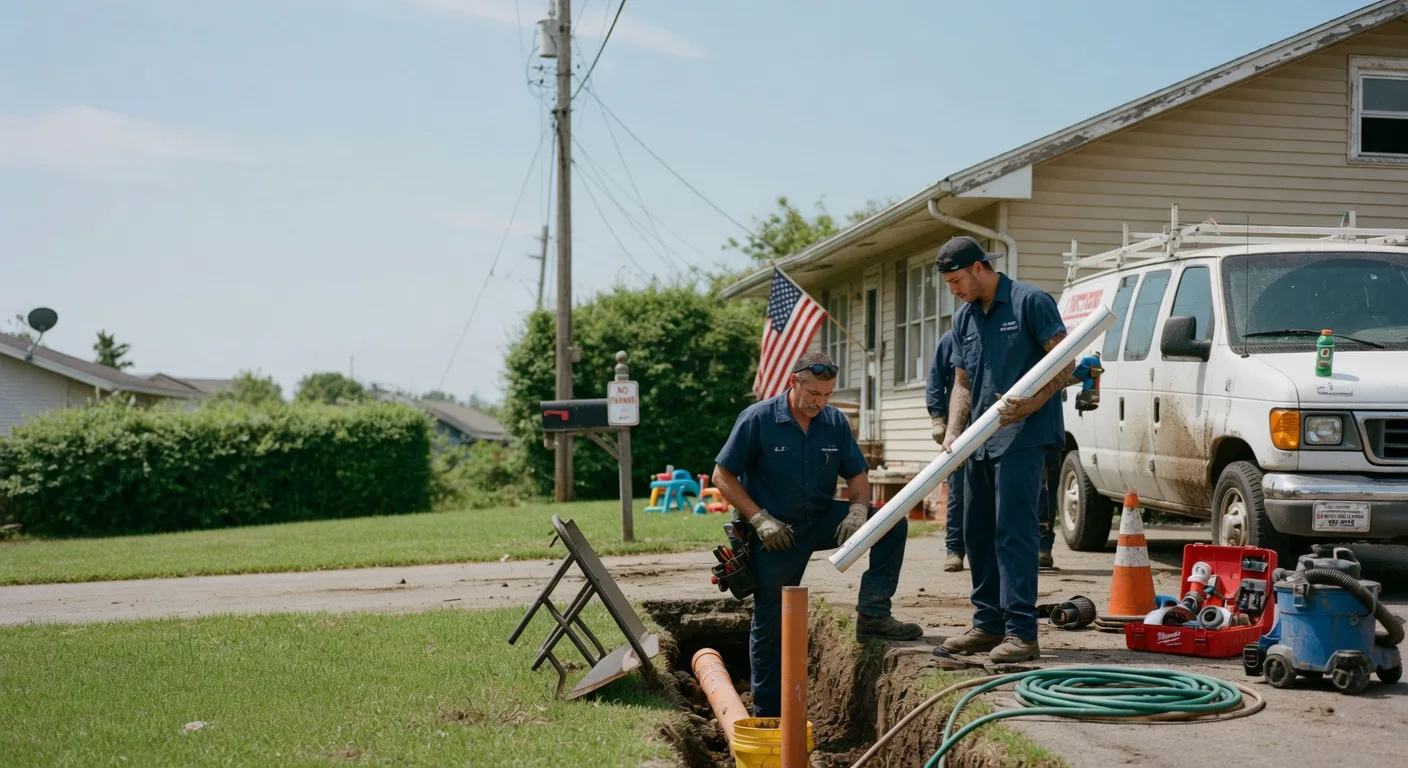
A single sink, tub, or floor drain running slow in Chicago, IL usually means one localized clog, not a whole-house problem, and a cable machine can clear it.

Talk to a pro
03 / 06

Main Line Cleaning

Every drain in the house backing up at once in Chicago, IL points to the main line, not one fixture, and needs a larger cable or jetting.

Talk to a pro
05 / 06

Sewer Line Inspection

Recurring backups or slow drains across Chicago, IL with no clear cause? A camera inspection finds the actual break, root, or bellied section first.

Talk to a pro
06 / 06

Sewer Line Repair

Multiple drains backing up at once in Chicago, IL, water pooling around a cleanout, or sewage odor in the yard usually points to a damaged sewer line, not a single clog.

Talk to a pro

About Expert Plumbers Co

Drain Cleaning and Plumbing Company in Chicago, IL

Chicago drain calls follow the housing. Brick bungalows, two-flats and three-flats went up across the city in the early twentieth century, and many still carry original cast iron stacks inside and clay tile sewer laterals under the yard. Both materials last a long time. Both fail in predictable ways.

The bungalow belt shows it best. Portage Park (60641, 60634) is mostly bungalows and two-flats. Beverly (60643) is mostly single-family homes, and most of them predate 1970. Bridgeport (60608) and Logan Square (60647) bring more of the same brick era, with bungalows and greystones on narrow lots.

  • Root intrusion at clay joints. Tile laterals were laid in short hub-and-spigot sections. Joints shift over decades, and parkway tree roots find the gap. The homeowner sees toilets that gurgle, then every drain slowing at once.
  • Combined sewer backup. Chicago's sewers carry storm water and household waste in the same pipes. In heavy rain the main can fill and push back, and the water takes the lowest opening: the basement floor drain, the laundry standpipe, the basement toilet. If it only happens in storms, a cable will not cure it.
  • Scaled cast iron. Old interior stacks roughen from the inside. Grease and paper catch on the scale. In a two-flat, one blocked stack shows up in two apartments.
  • Drum traps. The cylindrical trap under an older bathtub collects hair and soap. If a tub has been slow for years and keeps coming back, suspect it.

Ownership matters here. The lateral from the house to the street main is generally the property owner's to maintain, even where it runs under the parkway, so check your own address with the city before planning work. In a two-flat that puts the landlord in the middle when a basement unit takes on sewage.

Describe what you are seeing and the independent local plumber you are connected with will know which of these it sounds like before they arrive.

01

Symptom-first

One slow fixture is a different job from every drain in the house backing up.

02

Independent

Pricing and on-site work are set by the local provider, not by us.

03

Local

Partners serve the city you called from.

04

Whole-system

Fixture drains, branch lines, main line and sewer lateral.

Why choose us for Drain Cleaning

Chicago, IL Plumbers for Drain Cleaning

The homeowner's version: "The floor drain is gurgling," "the toilet bubbles when the washer runs," "water came up in the basement after the storm." Where to look first is whether it is one fixture or the whole house. One slow sink is usually a local clog in the trap or branch. Every drain at once, or the lowest drain first, points at the main line, the lateral or the street.

Stop running water and call now if: sewage is coming up through a floor drain or basement toilet, several fixtures back up together, or water is reaching the furnace, water heater or electrical panel. Do not flush, do not run the washer, and keep people out of the water.

Safe homeowner checks: plunge a single slow sink or tub, pull the stopper and clear the hair, and note whether the problem appears only during or after heavy rain. That last detail helps the plumber more than anything else you can tell them. Skip the chemical drain openers. They sit in a low spot in the pipe and make the next job harder to do safely.

Cable, jet or camera. A cable machine is enough for a single clog or a soft blockage in a branch line. Hydro jetting is the better tool for grease and scale built up on the pipe wall, and for roots that a cable only drills a hole through. A camera inspection is the right call when backups repeat, when roots keep returning, or when the plumber needs to see a bellied section holding water, a separated joint or a collapsed clay tile before anyone recommends a repair.

What drives the cost. Access comes first: a cleanout makes it a short job, while no cleanout means working through a fixture or opening up. Next is how much has to be opened or removed, such as a section of basement slab or the yard and parkway. Then the materials, whether that is relining a lateral or replacing clay with new pipe. Last is permits. In Chicago, repairing or lining a private sewer, or rodding a public one, requires a sewer permit, and the Department of Water Management inspects the work. The independent plumber sets the price and schedule.

If the cable cures a storm-only backup for a week and then it returns, ask about a backwater valve or an overhead sewer. That is flood control, a different job from drain cleaning.

Expert Plumbers Co is a referral service. We do not employ plumbers, dispatch crews or set prices. We take a description of your drain problem and connect you with an independent local plumber. Call (380) 262-9173.
  • Independent local partners
  • 24/7 emergency phone line
  • No obligation
  • Nationwide coverage
  • Symptom-first matching
  • Nights and weekends
Call (380) 262-9173
Why choose Drain Cleaning in Chicago, IL

How it works

Four simple steps to Drain Cleaning in Chicago, IL

01

Tell us the symptom

Tell us what the drain is doing and where you are.

02

Matched to the job

We match the problem to a plumber who has the right equipment for it.

03

They contact you

They contact you directly to arrange the visit.

04

If it is not right

If they cannot help, tell us and we find another.

Coverage

Drain Cleaning Services Across Chicago, IL

Covering Chicago, IL and nearby ZIPs.

Cook · Major global city known for its architecture, lakefront, and diverse neighborhoods. · Humid continental climate with hot summers and cold winters.

Neighborhoods we cover for Drain Cleaning

  • Lincoln Park
  • Wicker Park
  • Lakeview
  • Hyde Park
  • Logan Square
  • West Loop
  • South Loop
  • Uptown
  • Andersonville
  • Bridgeport
  • Pilsen
  • Rogers Park
  • Edgewater
  • Albany Park
  • Avondale
  • North Center
  • Irving Park
  • Portage Park
  • Jefferson Park
  • Dunning
  • Austin
  • Garfield Park
  • Chatham
  • Beverly

Local landmarks

  • Millennium Park
  • Navy Pier
  • Art Institute of Chicago
  • Willis Tower
  • Lincoln Park Zoo
  • Grant Park
  • Chicago Riverwalk
  • Soldier Field
  • Wrigley Field
  • Museum of Science and Industry
  • Shedd Aquarium
  • Field Museum
  • Chicago Cultural Center
  • Union Station

ZIP codes we serve

60601 60602 60603 60604 60605 60606 60607 60608 60609 60610 60611 60612 60613 60614 60615 60616 60617 60618 60619 60620 60621 60622 60623 60624 60625 60626 60628 60629 60630 60631 60632 60633 60634 60636 60637 60638 60639 60640 60641 60642 60643 60644 60645 60646 60647 60649 60651 60652 60653 60654 60655 60656 60657 60659 60660 60661
Drain Cleaning Chicago, IL FAQs

Drain Cleaning FAQs

Frequently asked questions about Drain Cleaning

Questions Chicago, IL homeowners and businesses ask most about Drain Cleaning, with straight answers.

Talk to a real person
How much does it cost to fix a blocked drain?
Expert Plumbers Co does not set or quote prices. It connects you with an independent local plumber, and that plumber names the number after seeing the actual problem. Several things drive the cost of a blocked drain. The first is where the clog sits. One slow sink with hair a few feet past the trap is a short cable job, while every drain in the house backing up points to the main line, which needs larger equipment and more time. The second is access. A clear, reachable cleanout keeps the work simple; if the plumber has to pull a toilet to reach the line, that adds labor. The third is the method. A cable machine punches a channel through a clog, hydro jetting scours the full pipe wall, and a camera inspection shows the pipe's condition so the plumber can tell whether cleaning is enough. The fourth is the pipe itself. Roots in clay joints, scale inside cast iron, or a bellied section holding water can turn a cleaning into a repair, and repairs bring in digging or lining, materials, and sometimes a permit. A plumber in Chicago, IL can narrow this down quickly once you say which fixtures are affected and how long it has been going on. Before the plumber arrives, write down a few facts that shape the scope of work. Note which fixtures are affected, when the problem started, and whether anything unusual went down the drain beforehand, such as wipes, a large amount of grease, or a child's toy. Find the cleanout, which is usually a capped pipe in the basement, the crawlspace, or outside near the foundation, and clear a path to it. Tell the plumber about any past backups or earlier repairs on that line. Ask them to explain the method before starting, and to say what the next step would be if the first approach does not clear the line. If a camera is used, ask to see the footage so you understand what is wrong. Any work beyond cleaning should be described to you before it begins, including how much has to be opened up and whether a permit applies.
Why does my basement floor drain back up when it rains?
A floor drain that backs up when it rains is usually not a clog in the drain itself. It means the sewer line outside the house is full, and the water has nowhere to go but up through the lowest opening, which is your basement floor. Heavy rain can push extra water into the main line through cracked joints, root intrusion at a clay joint or a failed sewer lateral. The line fills, and the floor drain shows it first. Safe homeowner check: on a dry day, pour a bucket of water into the floor drain and see if it runs away normally. Keep stored items off the floor, and do not run the washer, showers or dishwasher during the storm. Stop running water and call now if sewage is rising, the smell is strong, or every drain in the house is gurgling or backing up. That points to the main line, not one fixture. A cable machine can clear roots or grease when a blockage is the cause. If the line keeps filling in wet weather, a camera inspection is the next step, because it shows whether the pipe is cracked, bellied or breached. Hydro jetting washes the pipe wall once the cause is known. Cost depends on access, how much has to be opened up, the materials involved and any permit requirement. Expert Plumbers Co is a referral service. Call (380) 262-9173 and we will connect you with a plumber serving Chicago, IL for Emergency Drain Cleaning or a camera inspection. Pay attention to how fast the drain responds, because it tells you how serious the cause is. If the water rises within minutes of a downpour starting and drops soon after it ends, the line is being overloaded by water entering through cracks or joints. If it stays up for hours after the rain stops, something is also holding water in the pipe, such as a belly or a root mass. Older homes often have clay or cast iron lines with many joints and sometimes a downspout or foundation drain connected to the sewer, which makes wet-weather backups more likely. Newer homes with plastic pipe usually have fewer joints, so a backup there points more strongly to a blockage or a municipal main running full. Tell the plumber when the backups began, how heavy the rain was, and whether any gutters or sump discharge are tied into the house drains. Once the cause is fixed, the floor drain should stay quiet through storms.
How often does a main sewer line actually need cleaning?
There is no set interval that fits every house. A main sewer line in good shape, with no symptoms, does not need cleaning on a calendar. A line with a known problem often does. The usual reasons a main line needs repeat attention are root intrusion at a clay or loose joint, grease build-up on the pipe wall, or a bellied section that holds water and collects solids. Those problems do not go away after one cleaning. Roots regrow. A belly keeps holding water. A line like that may need cleaning on a schedule that suits what is found in it. The way to set that schedule is a camera inspection. It shows the cause, the condition of the pipe and where the trouble sits, so the interval is based on what is in the line and not a guess. Watch for the signs: slow drains in several fixtures, gurgling, a sewage smell, or the lowest drain in the house backing up. One slow sink is usually a branch line job. Several fixtures at once points to the main. A cable machine is often enough for roots and soft blockage. Heavy grease or scale needs hydro jetting. A failed sewer lateral needs repair, not cleaning, and cost then depends on access, the materials, how much is opened up and any permit required. If sewage is backing up, stop running water and call. Expert Plumbers Co is a referral service. We refer you to a local plumber for Drain Cleaning or Emergency Drain Cleaning in Chicago, IL: (380) 262-9173. What you notice between cleanings is more useful than the date on the calendar. Keep a simple note of when drains slow, when gurgling starts and how long each cleaning lasted. If the gap between problems keeps shrinking, the cause is getting worse and a camera inspection should come before the next cleaning. Older homes with clay or cast iron mains often show roots or scale returning within a year or two, while newer plastic mains usually stay clear much longer unless a joint has shifted or something was flushed that should not have been. A common mistake is paying for repeated cleanings without ever seeing the inside of the pipe. After a thorough cleaning and inspection, ask the plumber what the line looked like, how much was removed and when it makes sense to look again, so you leave with a plan.
The street sewer backed up into my house. What is a backwater valve?
Sewage came up through the basement floor drain, or a low toilet or tub gurgled and overflowed, during a storm or a heavy-use evening. The usual cause is the municipal main in the street filling past capacity, called surcharging. With nowhere to go, the flow pushes back up the lateral and out of the lowest opening in the house. A backwater valve, also called a check valve, is a fitting on the lateral or building drain with a flap that lets waste leave and shuts when flow reverses. It sits on the line ahead of the branches serving the lowest fixtures. Fitting one is not a quick swap. It usually means opening the floor or digging to reach the pipe. What it involves depends on access, the depth of the line, the valve and materials, how much has to be opened up and restored, and whether a permit or code sign-off is required. Rules vary by area. A valve does not fix roots at a clay joint or a bellied line holding water. It only stops reverse flow. A private line problem needs a camera inspection first, then a cable machine or hydro jetting depending on what the camera shows. Street or private? Ask three things. Are the neighbors affected? Did it coincide with heavy rain? Is only the lowest opening backing up while upper fixtures drain normally? Yes to those points to the street main. Only your house, in dry weather, points to your own lateral. Safe homeowner check: look at the neighbors and the forecast. Stop running water now: no flushing, washer or dishwasher. Keep people and pets out of contaminated water, and call. Expert Plumbers Co is a referral service. We connect you with an independent local plumber in Chicago, IL. Call (380) 262-9173. After the cleanup, ask how the valve will be kept working. The flap and its hinge can be stopped by lint, grease and grit, and then it no longer seats fully. Most valves have an access cover so the flap can be looked at and cleaned, and that should be done on a routine, not only after a storm. Learn where the cover is and keep boxes and floor coverings off it. One point catches people out. With the valve closed during a storm, your own household water has nowhere to go either. Showers, sinks and the washer will fill the line behind the flap, so keep water use low until the street main drops. After any backup, the floor drain and the area around it need to be cleaned and disinfected. Porous materials that soaked up sewage, such as carpet pad and cardboard, usually have to be removed rather than dried.
Since we put in a water softener, the floor drain or laundry drain backs up when it regenerates. Are they related?
The softener finishes its cycle and a minute later the laundry drain gurgles or the floor drain spits up gray water. You did not have this before, so it is fair to wonder if the softener caused it. In most cases it did not cause the clog. It exposed one. During regeneration, a softener flushes brine and rinse water out through a drain hose, usually into a standpipe, laundry tub or floor drain. That water arrives in bursts, and the volume is sudden. If the drain line is clear, it carries the surge without trouble. If the line has a partial clog, such as grease build-up on the pipe wall, a root mat at a clay joint or a belly holding water, the burst is more than it can pass, and the water rises in the lowest drain. The discharge also needs to be set up properly. Most plumbing codes require an air gap, a physical space between the end of the softener drain hose and the drain, so wastewater cannot siphon back into the softener. A hose pushed deep into a standpipe, or taped tight to it, can cause splashing and backflow of its own. Rules vary by area, so the installer or local building department can say what applies in Chicago, IL. The key question is how widespread it is. If only the standpipe backs up, the trouble may be the standpipe, its trap or the softener hose. If the floor drain, laundry drain and a basement toilet all react, the main drain is partly blocked, and the softener is just the first thing to push it over the edge. Safe homeowner check: look at where the softener hose ends. Make sure it sits above the drain with a visible gap and is not kinked or pushed down inside the pipe. Stop running water and call now if sewage is coming up through the floor drain, if water is spreading across the floor, or if you smell sewage. A cable machine is often enough for a soft clog in a short branch. If roots, a belly or grease are suspected, the work calls for a camera inspection and hydro jetting. Expert Plumbers Co is a referral service. We connect you with an independent local plumber in Chicago, IL. Call (380) 262-9173. Tell the plumber the problem started after the softener went in and when in the cycle it shows up. Ask them to check the air gap and the standpipe as well as the main. Scope depends on access to the line, parts for any standpipe or hose changes, how much has to be opened up if a section is damaged, and any code requirement.

Talk to a local Plumber

Need a plumber in Chicago, IL for Drain Cleaning? Call now.

Describe the problem and we connect you with a local Plumber for Drain Cleaning or Emergency Drain Cleaning. Call (380) 262-9173.

Call (380) 262-9173 Services